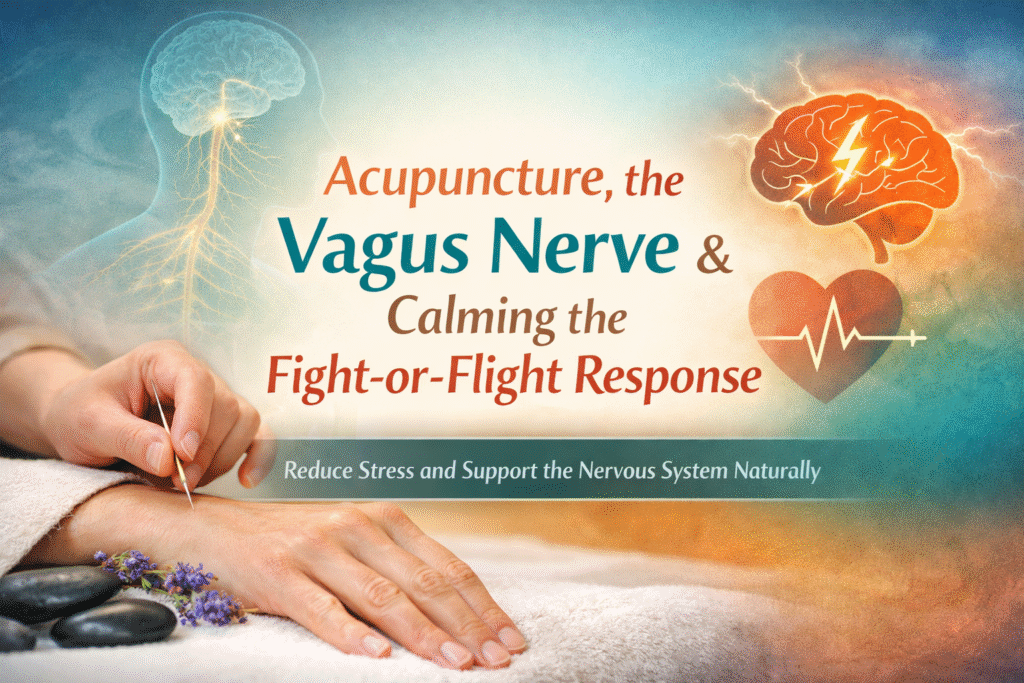
Acupuncture, the Vagus Nerve, and Calming the Fight-or-Flight Response
Modern life often keeps people in a constant state of stress. Deadlines, digital overload, and daily responsibilities can push the body into fight-or-flight mode, a stress response controlled by the autonomic nervous system.
When this response is activated, the body prepares to deal with danger by increasing heart rate, tightening muscles, and speeding up breathing. While this reaction is helpful in short bursts, chronic activation of the fight-or-flight response can negatively impact both physical and mental health.
One of the most important systems involved in restoring calm is the vagus nerve—and research suggests that acupuncture may help stimulate and regulate this vital nerve.
What Is the Vagus Nerve and Why Is It Important?
The vagus nerve is the main nerve of the parasympathetic nervous system, often referred to as the body’s “rest-and-digest” system.
When vagal activity is strong, the body can return to a state of balance and recovery. Healthy vagus nerve function supports:
Slower and more stable heart rate
Regulated breathing patterns
Reduced inflammation
Improved digestion
Better sleep quality
A calmer emotional state
Low vagal tone, however, is commonly associated with chronic stress, anxiety, inflammation, and nervous system overload.
Supporting vagus nerve activity is therefore a key part of maintaining long-term health and resilience.
How Acupuncture Supports the Nervous System
Acupuncture, a practice rooted in Traditional Chinese Medicine, has been increasingly studied for its ability to regulate the autonomic nervous system.
Research suggests acupuncture can help:
Reduce sympathetic nervous system activity (fight-or-flight)
Enhance parasympathetic activity (rest-and-digest)
Support vagus nerve activation
Rather than forcing the body to relax, acupuncture encourages the nervous system to naturally shift into a calmer and more balanced state.
Many people report experiencing:
Deep relaxation during or after treatment
Slower breathing and heart rate
Reduced anxiety and mental tension
Improved sleep
Better resilience to everyday stress
How Acupuncture Supports the Nervous System
Acupuncture, a practice rooted in Traditional Chinese Medicine, has been increasingly studied for its ability to regulate the autonomic nervous system.
Research suggests acupuncture can help:
Reduce sympathetic nervous system activity (fight-or-flight)
Enhance parasympathetic activity (rest-and-digest)
Support vagus nerve activation
Rather than forcing the body to relax, acupuncture encourages the nervous system to naturally shift into a calmer and more balanced state.
Many people report experiencing:
Deep relaxation during or after treatment
Slower breathing and heart rate
Reduced anxiety and mental tension
Improved sleep
Better resilience to everyday stress
Research Spotlight: PC6 (Neiguan) and Autonomic Balance
A 2025 study published in the Journal of Integrative Medicine investigated acupuncture at the PC6 (Neiguan) acupuncture point using a rat model of atrial fibrillation.
Atrial fibrillation is strongly influenced by stress, inflammation, and autonomic nervous system imbalance, making it an ideal model for studying nervous system regulation.
The study found that acupuncture at PC6:
Increased vagus nerve activity
Improved autonomic nervous system balance
Reduced inflammatory responses
Decreased the frequency and duration of abnormal heart rhythms
These findings help explain how acupuncture may work at a physiological level—by influencing vagus nerve signaling and calming the body’s stress response.
Although this study focused on heart rhythm, the same nervous system pathways are involved in everyday stress and anxiety regulation.
What This Means for Stress and Anxiety
When someone experiences chronic stress or anxiety, the nervous system often becomes stuck in sympathetic (fight-or-flight) dominance.Acupuncture helps the body shift back into parasympathetic (rest-and-digest) mode, allowing the nervous system to recover and rebalance.
Over time, this can help reduce symptoms such as:
Anxiety and nervous tension
Sleep disturbances
Digestive discomfort
Stress-related fatigue
Mental overwhelm
Rather than simply masking symptoms, acupuncture works by supporting the body’s natural regulatory systems.
The Bottom Line
Acupuncture offers a natural and gentle approach to supporting the vagus nerve and calming the fight-or-flight response. By helping regulate the autonomic nervous system, acupuncture may provide valuable support for individuals experiencing:
Chronic stress
Anxiety
Nervous system dysregulation
Sleep issues
Stress-related health concerns
As research continues to explore the relationship between acupuncture and the nervous system, it becomes increasingly clear that this ancient therapy may play an important role in modern stress management and holistic health care.
Our approach at Freedom Physio & Acupuncture Acupuncture
At Freedom Physio & Acupuncture, we take an individualised approach to sleep concerns. Acupuncture is often used alongside movement therapy, stress management strategies, and lifestyle guidance to support long-term sleep health — not just symptom relief.
If poor sleep is affecting your energy, recovery, or daily life, a personalised assessment can help determine whether acupuncture may be appropriate for you.
Conveniently located in Durham Rd. VIC, we’ve helped hundreds of patients move easier, feel stronger, and reduce their dependency on medication.
Book your first session today and start your path toward a pain-free life.
[Book Your Appointment Now →]